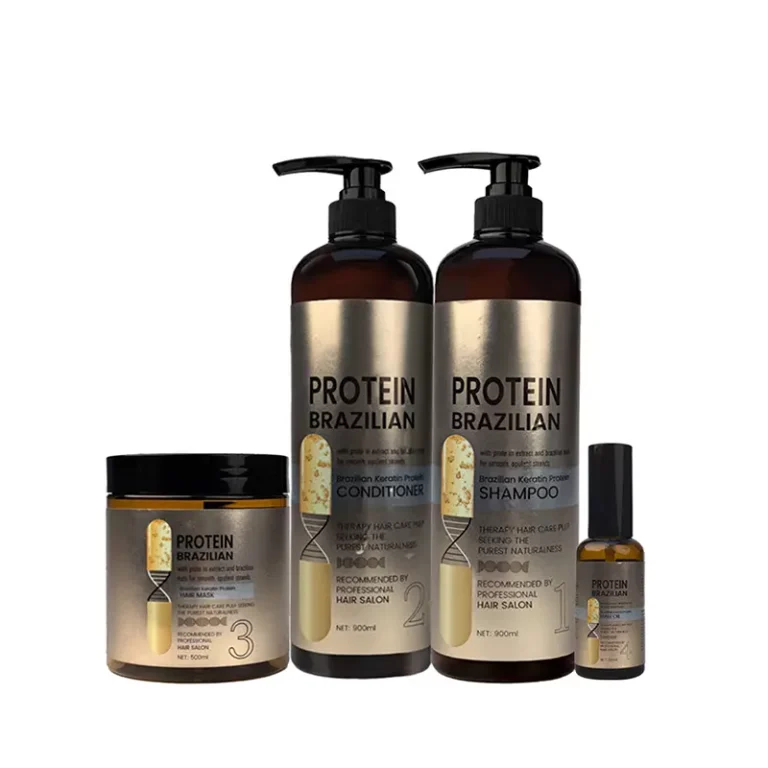
Thinking about launching a bond building hair mask? Demand for repair-focused treatments has exploded as consumers move away from harsh routines toward “fix the damage” products. A bond building hair mask sits at the premium end of that category — but formulating one that actually performs takes more than dropping a buzzword on the label. This guide covers the science, the ingredients, and what to brief your manufacturer.
What Is a Bond Building Hair Mask?
Hair is held together by three types of bonds: hydrogen, ionic (salt), and the strongest — disulfide bonds. Heat, bleach, and coloring break disulfide bonds, causing weakness and snap. Bond builders are small-molecule actives (most famously bis-aminopropyl diglycol dimaleate-type chemistry) that reconnect broken disulfide bonds during and after treatment.
A bond building hair mask delivers these actives in a conditioning base, so the user gets repair *and* softness in one step — unlike a standalone bond treatment that still needs a conditioner afterward.
Why It Matters for Buyers
Bond building is one of the few haircare claims with a visible, feelable result: less breakage, more elasticity, smoother ends. That makes it a strong hero SKU for brands targeting chemically treated, heat-styled, or curly hair. The catch: the claim must be real, or reviews will say so loudly.
For a manufacturer relationship, this means you need R&D that understands bond chemistry, not just a generic mask base with a marketing name added.
Key Factors to Evaluate
1. Formulation & Ingredients
The core is the bond-building active, but the supporting cast matters: hydrolyzed proteins, amino acids (arginine, cysteine), and humectants for immediate conditioning. Ask your manufacturer for the mechanism and typical inclusion rate, and whether the formula is compatible with color-treated hair.
2. MOQ & Lead Time
Bond masks often use specialized actives with longer procurement lead times. Confirm MOQ (pilot batches commonly start around 1,000–3,000 units) and whether the active is stocked or made-to-order, since that drives your timeline.
3. Certifications (ISO/GMP)
Same as any cosmetic: GMP, ISO 22716, and market-specific registration. For a repair claim, keep batch records clean — they’re your defense if a claim is ever challenged.
4. Customization Depth
Can they adjust fragrance, texture (cream vs balm), and add complementary actives like keratin or biotin? Deeper customization lets you build a distinct mask rather than a me-too product.
Common Mistakes to Avoid
- Marketing “bond building” without the active. Regulators and reviewers notice. Use a real, dosed ingredient.
- Overloading proteins. Too much hydrolyzed protein makes hair stiff and brittle. Balance with humectants.
- Skipping pH control. Bonding and conditioning perform best in a tuned pH range; test it.
- No substantiation. Keep in-vitro or salon-test data so the claim holds up.
Bond Building Hair Mask vs Alternatives
| Product | Primary benefit | Where it fits |
|---|---|---|
| Bond building mask | Repairs + conditions together | Premium hero SKU |
| Standalone bond treatment | Repair only, pre-conditioner | Professional/double-step |
| Regular conditioning mask | Surface softness | Maintenance, lower price |
A mask that combines bond repair with conditioning captures the most use-cases per purchase — which is why it converts well as a flagship.
FAQ
What makes a bond building hair mask different from a regular mask? A regular mask only smooths the cuticle. A bond building mask also reconnects broken internal disulfide bonds, addressing damage at the structural level, not just the surface.
Can it be used on color-treated hair? Yes — bond builders were popularized precisely for post-color and bleach repair. Confirm the formula is color-safe with your manufacturer.
How often should consumers use it? Typically 1–2 times per week. Overuse of protein-rich masks can build stiffness, so the brief should balance repair with moisture.
Is bond building the same as keratin treatment? No. Keratin adds protein to the surface; bond building rebuilds internal bonds. They’re complementary, not identical.
Conclusion & Next Step
A bond building hair mask is a high-intent, high-margin category — but only if the formulation is real. Brief your manufacturer with the target hair concern, desired texture, and claim level, then validate with a stability and feel test before committing volume.
For formulation depth, see our guide on Custom Shampoo Manufacturers to evaluate R&D partners, and explore a Color Locking Conditioner as a complementary line extension. On the production side, our sister site covers Gold Caviar Hair Mask positioning.
Explore our manufacturing network
Looking beyond this guide, our sister sites cover complementary angles:
- Hair Mask Manufacturing Plant Cost: Real Budget Breakdown — on our Guangdong shampoo factory site (theshampoofactory.com)
- Building a Dandruff Product Line with a Guangzhou Factory — on our Guangzhou shampoo factory site (guangzhoushampoo.com)